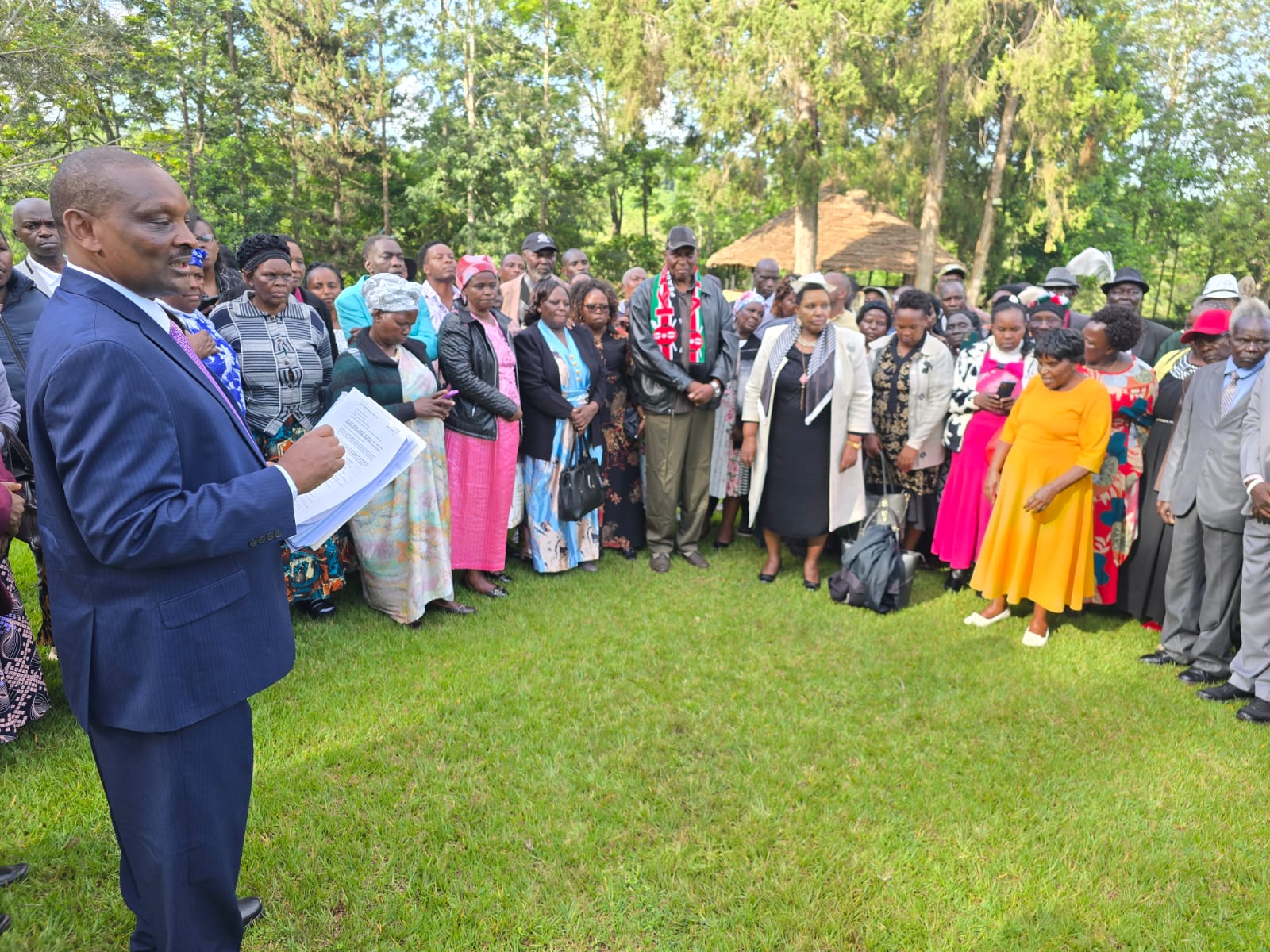
Mau Mau Veterans, Descendants Set for Nairobi Heritage, Welfare Summit
More than six decades after Kenya attained independence, the struggle to preserve the memory of the Mau Mau liberation movement and secure justice for its surviving veterans and descendants continues to shape national conversations on identity, compensation, and historical recognition.
On Friday, members of the Mau Mau community drawn from across the country are expected to converge in Nairobi for a Members’ Luncheon and African Heritage Fellowship organised by MMV Associates CLG.
The event, which will be held at the Iconic Plaza Hotel on Market Street off Uhuru Highway is expected to bring together veterans, elders, descendants of freedom fighters, heritage activists, and officials from government agencies in what organisers describe as a celebration of Kenya’s liberation legacy and a forum for charting the future of the movement.
According to the public notice issued by the organisers, the fellowship seeks to strengthen unity among members while discussing pressing issues affecting the welfare of former freedom fighters and their families.
Among the agenda items are deliberations on the MMV Associates CLG 2026/2027 budget, veterans’ welfare expenses, ongoing efforts towards compensation for colonial injustices, and strategies for preserving African heritage and indigenous knowledge.
Registration for participants has been ongoing at Blue Post Hotel, with organisers urging all members to formalise their participation ahead of the gathering.
Officials from the Public Benefits Organisations Regulatory Authority (PBORA) are expected to attend as guests of honour, reflecting the growing interaction between Mau Mau advocacy groups and institutions responsible for regulating public benefit organisations.
For many families represented within the movement, the event is about much more than fellowship.
It is part of a broader campaign seeking acknowledgement of the sacrifices made by those who fought against British colonial rule during the 1950s Emergency period.
While a landmark settlement reached in 2013 saw a number of elderly Mau Mau veterans compensated by the British government for torture and abuse suffered during detention, many descendants and families maintain that thousands of victims were left out of the compensation framework.
Consequently, Mau Mau organisations have intensified calls for expanded reparations covering issues such as land dispossession, forced displacement, loss of livelihoods, and the long-term social and economic effects borne by subsequent generations.
At the forefront of these campaigns is MMV Associates CLG Director General James Njuguna Mahuria, whose name has increasingly become synonymous with contemporary Mau Mau advocacy.
Over recent years, Mahuria has spearheaded efforts to unite the numerous associations representing former freedom fighters and their descendants under common structures aimed at amplifying their voice.
He has consistently argued that fragmentation among veteran groups weakens the pursuit of justice and compensation.
Under his leadership, MMV Associates CLG has rolled out nationwide registration drives involving descendants and veterans from all 47 counties, seeking to establish comprehensive records of those affected by colonial injustices and strengthen organisational structures. Recently, the group took over the former freedom fighters’ office at The National Archives in Nairobi after the former occupiers were accused of using it to further other interests, other than of the intended purpose when the government allocated it to them by the Kibaki administration.
The organisation has also engaged government agencies, financial institutions, and regulators in a bid to enhance transparency and institutional legitimacy.
Mahuria has further championed participation in public policy processes, particularly around the implementation of the Public Benefits Organisations Act, arguing that stronger legal frameworks can provide avenues through which veterans’ organisations can effectively pursue recognition and reparations.
He has repeatedly emphasised that compensation should transcend ethnic considerations and extend to all individuals and families adversely affected by colonial oppression.
Beyond compensation, the MMV Associates CLG Director General has advocated for the preservation of liberation history through documentation, archival initiatives, and the transmission of indigenous knowledge to younger generations.
His message has consistently centred on ensuring that the story of the Mau Mau is not confined to textbooks or commemorative statues, but remains a living heritage capable of inspiring patriotism, resilience, and national unity.
Organisers of Friday’s fellowship say the event therefore represents both remembrance and renewal.
It is expected to provide an opportunity for elderly veterans to reconnect with fellow comrades, for descendants to better understand their historical roots, and for younger Kenyans to appreciate the sacrifices that laid the foundation for the country’s independence.
The theme adopted by the organisers; “Honouring Our Past, Uniting For Our Future” captures this dual purpose.
As surviving veterans age and memories of the liberation struggle gradually fade, those championing the cause believe that preserving the Mau Mau legacy has become an urgent national responsibility.
For the men and women gathering in Nairobi this week, freedom is not merely a historical achievement to be celebrated annually.
It is a continuing journey demanding recognition, dignity, justice, and an unwavering commitment to ensuring that the sacrifices of Kenya’s freedom fighters are neither forgotten nor diminished by time.
Ends…
About The Author